How to Transition from Highly Processed Foods to a Whole Foods Lifestyle (Without Feeling Overwhelmed)
Ready to stop living on processed foods but don’t know where to start? Learn how to transition to a whole foods lifestyle step-by-step — without restriction, guilt, or overwhelm.
If you’ve ever stood in your kitchen thinking,
“I know I should be eating better… but where do I even start?”
You are not alone.
For most families, highly processed foods are convenient, affordable, and familiar. The problem? Over time, they can leave you feeling bloated, tired, inflamed, moody, and constantly craving more.
The good news?
You don’t need a complete pantry purge or a 30-day detox to start feeling better.
You just need a plan.
Let’s break this down in a realistic, sustainable way.
First, What Are Highly Processed Foods?
Highly processed foods are items that have been significantly altered from their original form and often contain:
- Artificial flavors or colors
- Added sugars
- Refined oils
- Preservatives
- Stabilizers and fillers
- Long ingredient lists you can’t pronounce
Examples include:
- Packaged snack cakes
- Sugary cereals
- Fast food
- Frozen convenience meals
- Soda and sweetened drinks
- Flavored chips and crackers
These foods are designed to be hyper-palatable — meaning they light up your brain and make you want more.
What Is a Whole Foods Lifestyle?
A whole foods lifestyle focuses on foods that are:
- Close to their natural state
- Minimally processed
- Nutrient-dense
- Free from unnecessary additives
Think:
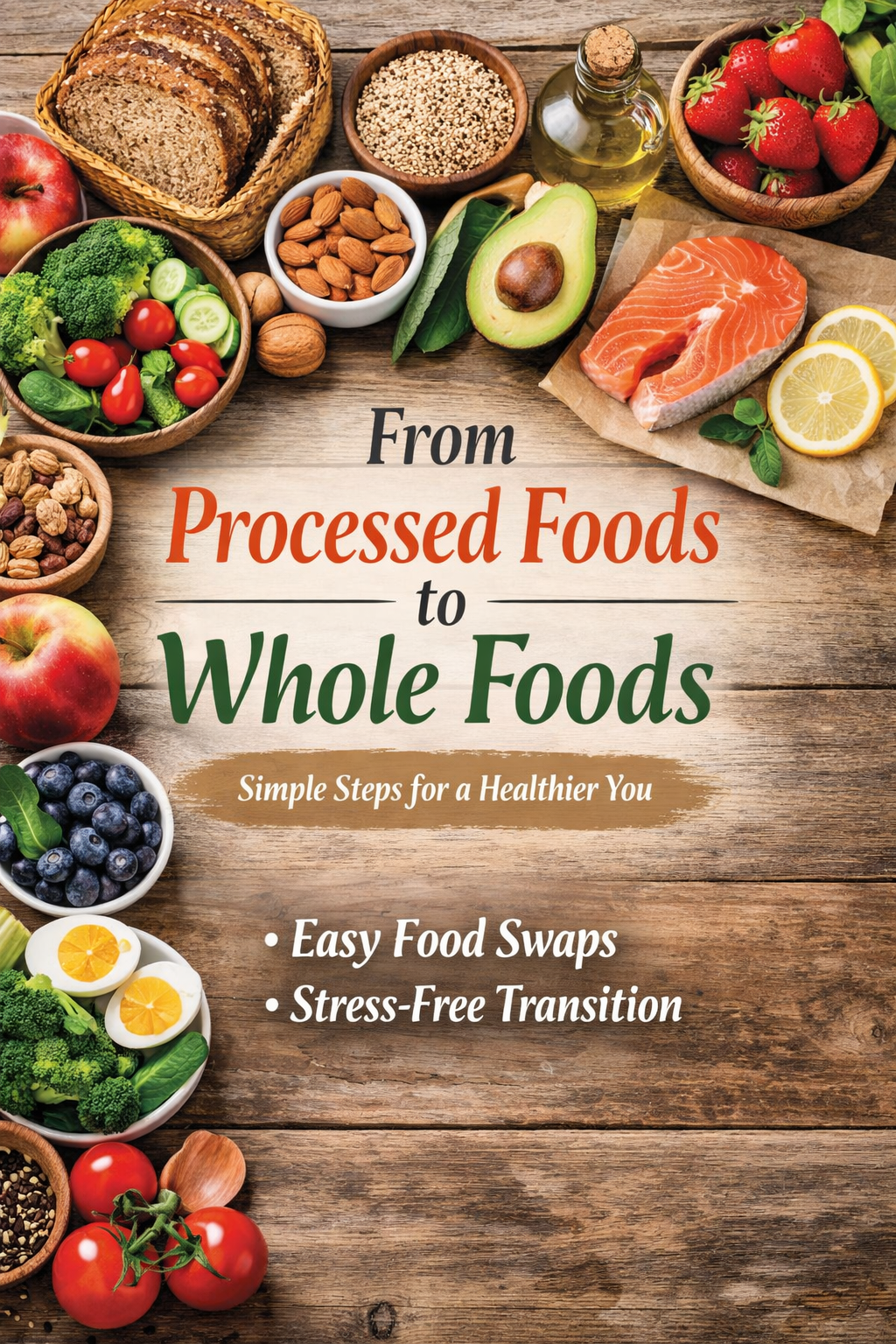
- Fresh fruits and vegetables
- Whole grains
- Beans and legumes
- Nuts and seeds
- Quality proteins
- Healthy fats
It’s not about perfection.
It’s about choosing foods that nourish your body more often than they drain it.
Why Most People Fail When They Try to “Eat Clean”
Here’s where people go wrong:
- They throw everything away and try to be perfect overnight.
- They eliminate entire food groups without understanding balance.
- They don’t plan ahead.
- They underestimate how strong processed food cravings can be.
The result? Burnout.
Then they swing back to convenience foods even harder.
Transitioning needs to be gradual and strategic.
How to Transition Step-by-Step (The Sustainable Way)
1. Start with Addition, Not Subtraction
Instead of removing everything, start by adding:
- One vegetable to dinner
- One whole-food breakfast option per week
- One homemade snack swap
When your body gets more nutrients, cravings naturally start to shift.
2. Upgrade Your Swaps
Instead of:
- Sugary cereal → Try oatmeal with fruit and nuts
- Soda → Sparkling water with lemon
- White bread → Whole grain or sourdough
- Packaged snacks → Apple + nut butter
Small swaps add up quickly.
3. Stabilize Blood Sugar First
Most processed cravings are blood sugar crashes.
Focus on meals that include:
- Protein
- Fiber (while this can be controversial do what feels best for YOUR body)
- Healthy fat
This combination helps reduce cravings and keeps energy stable.
4. Clean Out One Category at a Time
Instead of purging your entire kitchen, try:
Week 1: Upgrade breakfast
Week 2: Upgrade snacks
Week 3: Improve lunch
Week 4: Improve dinner
Progress > perfection.
5. Expect Withdrawal (Yes, Really)
Highly processed foods — especially sugar — can cause real cravings when reduced.
You might experience:
- Headaches
- Irritability
- Strong sugar cravings
- Fatigue
This is temporary. It usually improves within 7–14 days.
What Actually Changes When You Transition
Many people report:
- More stable energy
- Reduced bloating
- Better digestion
- Fewer cravings
- Improved mood
- Better sleep
When you give your body real fuel, it responds.
You Don’t Need to Do This Alone
If you’re ready to transition but want structure and guidance, we are providing a step-by-step guide linked below that walks you through:
- How to clean up your pantry strategically
- Grocery list upgrades
- Beginner-friendly swaps
- How to handle cravings
- A realistic transition plan
✨ It’s designed specifically for busy women and families who want to move toward whole foods without going extreme.
You can download the free guide here:
Final Thoughts
Transitioning from highly processed foods to a whole foods lifestyle isn’t about being “perfect.”
It’s about:
- Being intentional
- Taking small steps
- Nourishing your body consistently
You don’t need to flip your life upside down.
You just need momentum.
And momentum starts with one choice.